When a system already exists, AI agents read it first: the code, the running screens, the database. They write down what it does today, and they mark what they could not check.
AI SDLC is the way Focaloid builds software, in about half the hands-on time. AI agents write the requirements, the code and the tests. A person checks each step before the next one starts. And one thread connects everything, from your business goal to the running system.
Most AI tools help one developer write code faster. AI SDLC runs the whole project: seven phases, from the first look at your system to the day it is live, and after. With a person in charge at every step.
Every requirement gets an ID at the start. The same ID is on the ticket, in the code, on the test and in the release. When something breaks in production, we can see which requirement it broke, and which business goal that requirement serves. A normal AI coding tool cannot do this.
AI agents write, test and review. But work does not move to the next phase until a person has checked it and approved it. Every approval is recorded, with a name and a time.
Threats are considered at design time, not after. Automatic security checks run on the code and on the running system. Everything is logged. Our delivery is certified to ISO/IEC 27001:2022.
How it works inside is shown in a private demo, on a real project. This page tells you what to expect from it.
The first six phases run once, from start to finish. The seventh keeps running after the release and sends what it finds back into the chain. Here is what happens in each phase, what you get, and who approves it.
When a system already exists, AI agents read it first: the code, the running screens, the database. They write down what it does today, and they mark what they could not check.
Agents turn your goal into small, testable requirements, a design, a backlog and a test plan. Every requirement gets an ID, and it keeps that ID for the rest of the project.
Agents write the tests first, then the code that passes them. Routine changes are reviewed by AI. Complex or sensitive changes go to a named engineer.
The new version is set up in a staging environment that works like production, with test data, and with a list of which requirements it delivers.
Agents test the running system from end to end: the screens and the APIs. Anything that fails goes straight back to Build as a ticket.
A change record, a rollback plan written before the deployment, a step-by-step rollout with health checks, and release notes written in business language.
After release, the platform watches production. It groups errors by cause and sends them back into the chain, linked to the requirement they affect. It never changes production on its own.
At every hand-over, a person confirms the work before the next phase starts. Not because we do not trust the agents. Because a mistake gets more expensive with every phase it passes through.
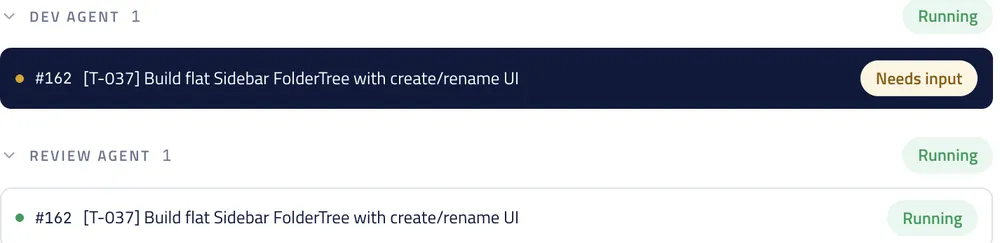
A code review asked the coding agent to add tests. The agent’s own rules said a separate agent writes the tests. It stopped, explained both rules, and asked an engineer which one should win. It did not guess.

Speed on its own is easy to promise. This is what you actually get.
AI SDLC is not a plan or a slide. It is a working platform that our teams use every day. We show it on a real project, in a private demo.
We keep the details for the demo. Bring a system you are thinking of rebuilding, and we will show you what the first phase would do with it.

AI SDLC is what we use in the Build phase of every project. It is the reason a borderline business case can still pass in the Decide phase: about half the hands-on build time, with a named engineer approving every step.
What it costs to build, run, review and govern, against what it saves. Before anyone writes code. Sometimes the answer is: do not build it.
The AI Business CaseRequirements, design, code, tests, review and release. Agents do the work in every phase. A person approves each hand-over.
This page ↑Quality gates, guardrails, an audit trail a regulator will accept, and a platform that keeps watching production for as long as the system runs.
AI Governance →No slides. We open the platform, pick a real project, and walk through it with you: how a requirement becomes code, where a person approves, and what the record looks like at the end. Bring a system you are thinking of rebuilding.
30 minutes · the live platform · with one of the people who built it